Why does my water heater leak from the bottom?
A water heater leaking from the bottom is almost never a simple fix. Here's what causes it in Gaithersburg homes, what it costs to repair in 2026, and when to replace.
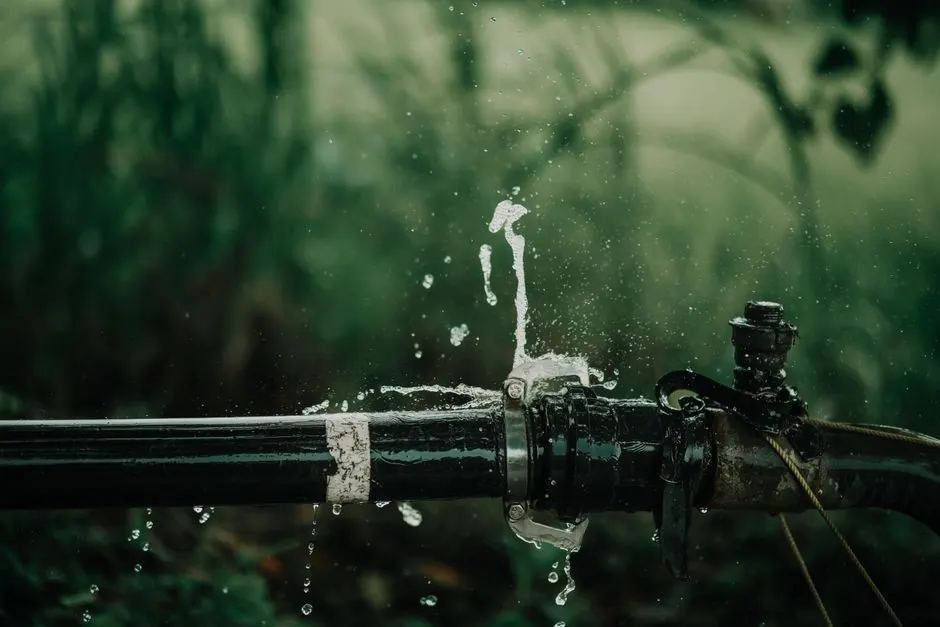
If your water heater is leaking from the bottom, the tank itself has almost certainly failed - and no amount of tightening, sealing, or patching will bring it back. Bottom leaks on a storage tank mean rust has eaten through the steel liner, and the only real fix is replacement. The good news: you usually have a few days of warning before the tank lets go completely, and that window is when you call us instead of your insurance company.
We handle water heater leak cleanup and repairs across Gaithersburg every week, and the pattern is always the same. A homeowner notices a damp ring under the tank, mops it up, and hopes for the best. Three days later there's an inch of water in the utility room. This guide explains exactly why bottom leaks happen, how to confirm the source, what 2026 repair and replacement costs look like in Montgomery County, and when a leak has already done enough damage that you need more than a plumber.
The short answer: bottom leaks are usually tank failures
A water heater leaking from the bottom is a corrosion failure inside the tank that no external repair can reverse. The steel shell of a residential tank is lined with glass and protected by a sacrificial anode rod. Once that anode is consumed - usually somewhere between year 6 and year 10 - the lining starts to pit, water reaches the steel, and rust works its way through from the inside out. By the time you see water on the floor, the tank wall has already perforated.
That's why plumbers say a bottom leak is a death sentence for the unit. There is no weld, epoxy, or clamp that survives 40 to 60 PSI of internal pressure and 120 to 140°F water. Anyone offering to "seal" a leaking tank bottom is selling you time you don't have.
If you're already seeing water spread across the floor, the priority shifts from the tank to the room. Standing water under a water heater wicks into drywall, baseboards, and subfloor within hours. That's the point where homeowners start searching for water damage repair Gaithersburg MD rather than a plumber, because the tank is the smaller problem.
Why is my water heater leaking from the bottom in Gaithersburg MD?
Water heater leaking from bottom in Gaithersburg comes down to five causes, and four of them are age-related. Here's what we actually find when we pull a tank out of a Gaithersburg basement or utility closet:
- Internal tank corrosion. The most common cause by far. Tanks in this area typically fail between year 8 and year 12, and hard Montgomery County water accelerates the timeline.
- A failed anode rod. The anode is designed to corrode so the tank doesn't. Skip replacing it and you're trading a $40 part for a $1,400 tank.
- Sediment buildup. Our water carries dissolved minerals that settle on the tank floor. That layer traps heat, overheats the steel, and cracks the glass lining.
- Overpressure from a bad T&P valve. If the temperature and pressure relief valve is stuck or scaled, internal pressure climbs and finds the weakest point - usually the bottom seam.
- Loose drain valve or fitting. The one bottom leak that is repairable. A drain valve that drips at the spout or a fitting that weeps at the thread is a plumbing fix, not a tank replacement.
Gaithersburg homes add a couple of local wrinkles. Older neighborhoods around Olde Towne and the streets off Diamond Avenue have tanks in tight basement corners with no drain pan and no floor drain - so a slow leak soaks into the slab instead of running somewhere visible. Newer construction in the Kentlands and Lakelands often puts the water heater in a second-floor mechanical closet, which means a bottom leak drips straight into the ceiling below. We've pulled soaked insulation out of more ceilings in those neighborhoods than we can count.
If your tank sits in a finished space and you're already seeing ceiling stains or a soft spot in the floor, that's Water Damage Repair in Gaithersburg territory - the tank leak and the structural damage need to be handled together, not one after the other.
How to tell where the leak is actually coming from
Before you assume the worst, confirm the leak is really coming from the bottom of the tank and not running down from somewhere above. Water travels. A leaking inlet fitting at the top of the tank will follow the shell, drip off the base, and look exactly like a bottom leak.
Here's the five-minute check we walk homeowners through on the phone:
- Dry everything. Towel off the tank, the pipes, and the floor. Wait 30 minutes.
- Watch the top first. Check the cold inlet, hot outlet, T&P valve, and the flue collar. If any of those are wet, the leak is up top.
- Look at the drain valve. A drip at the spout or a weep at the threads is a $15 to $60 fix.
- Check the base seam. If water reappears at the bottom of the tank with everything above it dry, the tank is done.
- Look for rust streaks. Vertical rust trails down the side of the tank point straight to the source.
One more tell: if the water is warm, it's coming from the tank. If it's cold, it's probably a supply line or a condensation issue. Condensation on a gas water heater in a humid Gaithersburg summer basement is common and harmless - it's not a leak at all.
Can a water heater leak from the bottom be repaired?
A water heater leak from the bottom can be repaired only when the source is the drain valve, a threaded fitting, or a loose connection at the base - not the tank itself. That distinction matters, because it's the difference between a $60 service call and a full replacement.
Repairable bottom leaks:
- Drain valve dripping at the spout - replace the valve, $15 to $40 in parts plus labor.
- Drain valve weeping at the threads - reseal or replace, usually under an hour.
- Loose dielectric nipple or union at the base - tighten or reseal.
Not repairable:
- Water seeping through the tank shell itself.
- Rust streaks running down the side of the tank.
- Water pooling at the base seam with everything above it dry.
If you're in the second group, stop looking for a repair and start planning a replacement. A tank that's already perforated can go from a slow drip to a full rupture without warning, and a 50-gallon tank releases 50 gallons of water into your home in minutes.
Should I replace my water heater if it's leaking from the bottom?
Yes - if the tank shell is the source, replace it. The only question is how fast you can get it done. Here's the decision framework we use:
- Tank under 6 years old, leak at the drain valve: repair it. You've got years left.
- Tank 6 to 10 years old, tank shell leaking: replace now. A repair won't hold.
- Tank over 10 years old, any bottom leak: replace immediately. You're on borrowed time.
- Rusty hot water, popping sounds, or inconsistent temperature: replace regardless of age. Those are end-stage symptoms.
While you're replacing, it's worth upgrading. A standard 50-gallon gas tank runs $1,200 to $1,800 installed in Gaithersburg in 2026. A tankless unit runs $3,000 to $4,500 installed but lasts 20 years instead of 10 and frees up the floor space. If your current tank sits in a finished basement or a second-floor closet, ask about a drain pan and an automatic shutoff valve - a $150 add-on that prevents the exact disaster you're dealing with now.
And if the old tank has already soaked your subfloor or drywall, get the water damage handled before the new tank goes in. We see this constantly: new water heater installed on top of wet framing, and six months later there's mold in the wall. If you're in North Potomac or the surrounding areas and dealing with a soaked utility room, our team handles Water Damage Restoration in North Potomac and can dry the space before the replacement goes in.
What it costs in Gaithersburg in 2026
Typical 2026 pricing in this area breaks down like this:
- Diagnostic visit: $75 to $150, often waived if you proceed with the repair or replacement.
- Drain valve replacement: $150 to $300 all-in.
- Anode rod replacement (preventive): $200 to $350.
- Standard 40 to 50-gallon tank replacement: $1,200 to $1,800 installed.
- Tankless replacement: $3,000 to $4,500 installed, plus venting modifications in older homes.
- Water extraction and structural drying after a tank failure: $1,200 to $3,500 depending on square footage and how long the water sat.
The pattern is obvious. A $40 anode rod every five years is cheap insurance against a $1,500 tank replacement and a $2,500 drying bill. Most homeowners never touch the anode, which is exactly why bottom leaks are so common in this region.
Water heater leak cleanup and water damage
Water heater leak cleanup in Gaithersburg is not the same as mopping up a spill. A tank failure releases 40 to 80 gallons of water, and that water doesn't stay on the surface. It wicks into baseboards, travels under vinyl and tile, and soaks into the subfloor within the first hour.
What we do on a water heater leak call:
- Shut off the water and gas or power to the tank.
- Extract standing water with truck-mounted equipment.
- Pull baseboards and check the wall cavity for moisture.
- Set air movers and dehumidifiers - typically 3 to 5 days of drying.
- Meter the space daily until moisture readings match a dry standard.
- Document everything for your insurance claim.
Mold can start growing on wet drywall in 24 to 48 hours. That's the clock you're racing. If the tank failed in a finished basement or a second-floor closet, don't wait to see if it dries on its own - it won't.
For larger losses - a tank failure in a commercial building, an apartment complex, or a multi-unit property - the scope changes. Our commercial water damage restoration in Gaithersburg team handles those jobs with the same equipment and a faster mobilization, because a single tank failure in a commercial mechanical room can affect multiple tenants.
Common mistakes homeowners make
The mistakes we see on water heater leak calls are consistent, and they all make the damage worse.
- Mopping and hoping. Surface water is the visible 10%. The other 90% is in the walls and subfloor.
- Ignoring the leak because it's slow. A slow bottom leak becomes a fast one without warning. Tank failures don't taper off.
- Trying to seal the tank. Epoxy and tank patches don't hold under pressure. You're buying days, not years.
- Running the tank while it leaks. Every cycle adds pressure and accelerates the failure. Shut the water off at the valve.
- Skipping the anode rod. The single cheapest preventive maintenance on any water heater, and almost nobody does it.
- Not documenting for insurance. Photos, moisture readings, and a written scope are what get claims approved. Take pictures before you clean anything up.
One more: don't install a new tank on a wet floor. We've seen it twice this year - new water heater, old moisture, mold bloom two months later. Dry the space first.
When to call a professional
Call a professional the moment you see water at the base of the tank and can't identify a drain valve or fitting as the source. That's the line. Below it, you might have a simple plumbing fix. Above it, you have a tank failure and a water damage problem running in parallel.
Also call if:
- The tank is over 8 years old and leaking anywhere.
- You see rust streaks on the tank shell.
- The water is warm and pooling at the base.
- Water has reached carpet, drywall, or a finished ceiling.
- You smell a musty odor near the tank.
Our team handles both sides of the problem - the water damage and the coordination with your plumber for the replacement. We serve homeowners across Gaithersburg and the surrounding communities, including Darnestown water damage restoration for properties on well water where sediment buildup tends to shorten tank life. If you're not sure whether you need a plumber, a restoration crew, or both, call us and we'll tell you straight.
Frequently Asked Questions
Why is my water heater leaking from the bottom in Gaithersburg MD?
In 9 out of 10 cases, the tank shell has corroded through from the inside. Gaithersburg's hard water accelerates sediment buildup and anode rod depletion, so tanks here often fail between year 8 and year 12. A drain valve or fitting leak is the only bottom leak that's actually repairable.
Can a water heater leak from the bottom be repaired in Gaithersburg?
Only if the source is the drain valve, a threaded fitting, or a loose connection. Tank shell leaks cannot be repaired - no sealant holds under 40 to 60 PSI and 120 to 140°F water. Expect $150 to $300 for a drain valve fix, or $1,200 to $1,800 for a full tank replacement.
Does homeowners insurance cover water heater leak damage in Gaithersburg Maryland?
Usually yes for the resulting water damage, rarely for the tank itself. Standard HO-3 policies cover sudden and accidental discharge - a tank that ruptures and floods your basement is typically covered. A slow leak you noticed for weeks is often denied as neglect. Document everything and file promptly.
How long do I have before a leaking water heater causes mold?
Mold can begin growing on wet drywall in 24 to 48 hours. Standing water wicks into baseboards and subfloor within the first hour. If the tank failed in a finished space, call for extraction the same day - drying typically takes 3 to 5 days with professional equipment.
Should I replace my water heater if it's leaking from the bottom in Gaithersburg MD?
Yes, if the tank shell is the source. A perforated tank can rupture without warning and dump 40 to 80 gallons into your home. If the tank is under 6 years old and the leak is at the drain valve, repair it. If it's over 8 years old, replace it.
Get help with Water Damage Restoration in Gaithersburg
If your water heater has already leaked onto the floor, the tank is the smaller half of the problem. We extract the water, dry the structure, and document everything for your insurance claim - usually starting the same day you call.
Call Water Damage Restoration at 123456789 and we'll get a crew to your Gaithersburg home before the water has time to spread.